Discover Your Next Great Read
Roberta Reb Allen
Research-Driven Non-Fiction
Telling the stories of people and places, great and small, making up American history.
BOOKS
UPCOMING: A. MONTGOMERY WARD, “SELF-TAUGHT, SELF-EDUCATED”: A NON-TRADITIONAL BIOGRAPHY

A. Montgomery Ward, “self-educated and self-made”: A Non-Traditional Biography focuses on Ward, the man—his character and the various factors that influenced and molded it. The infusion of his character and beliefs in his eponymous company helped to fundamentally change retailing at a time after the Civil War when the increased movement west, fed in part by increased emigration, resulted in a dramatic growth in the number of farms. It was this farming population that Ward chose to serve by not just offering quality goods at low prices but by building the trust necessary for ordering such goods at a distance, thus leading the way in the growth of mail ordering and ultimately of the Internet economy. Long before Amazon, he was mail ordering groceries. Part of building this trust was his insistence on truth in advertising and his offering a money back guarantee, which have become imbedded in today’s retailing business. Ward was a fighter and along with the other fights he undertook against trusts in the course of business, his character and beliefs led to his fight to keep Grant Park as a public park despite considerable opposition and ridicule.
Surprisingly, this will be the first biography of this iconic figure.
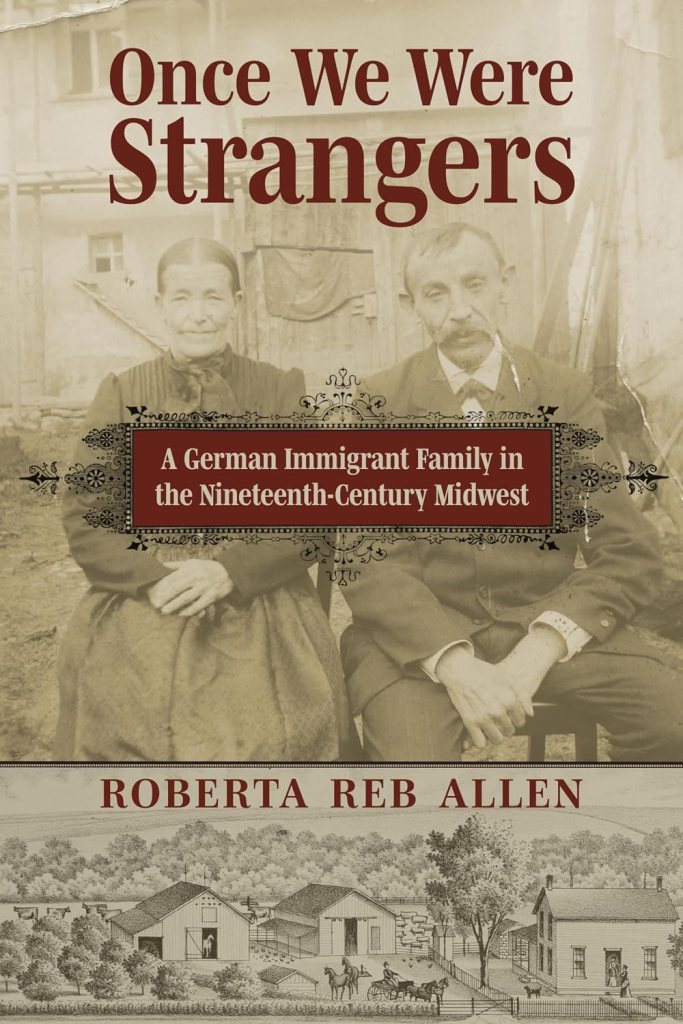
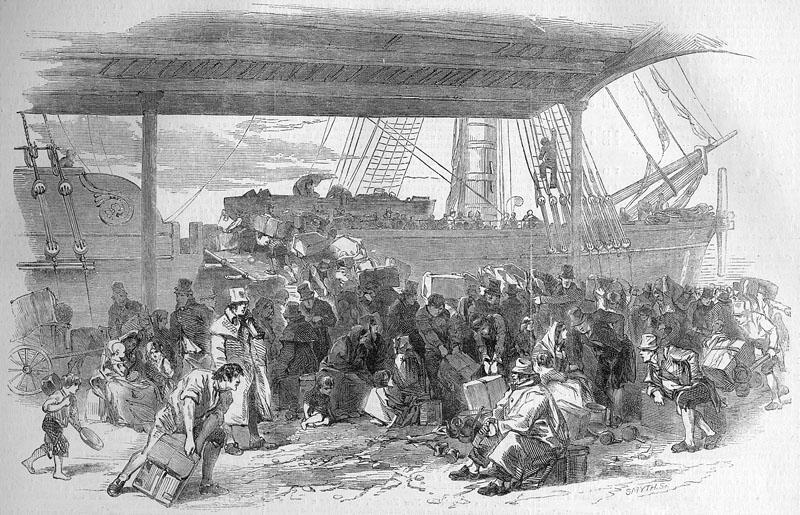
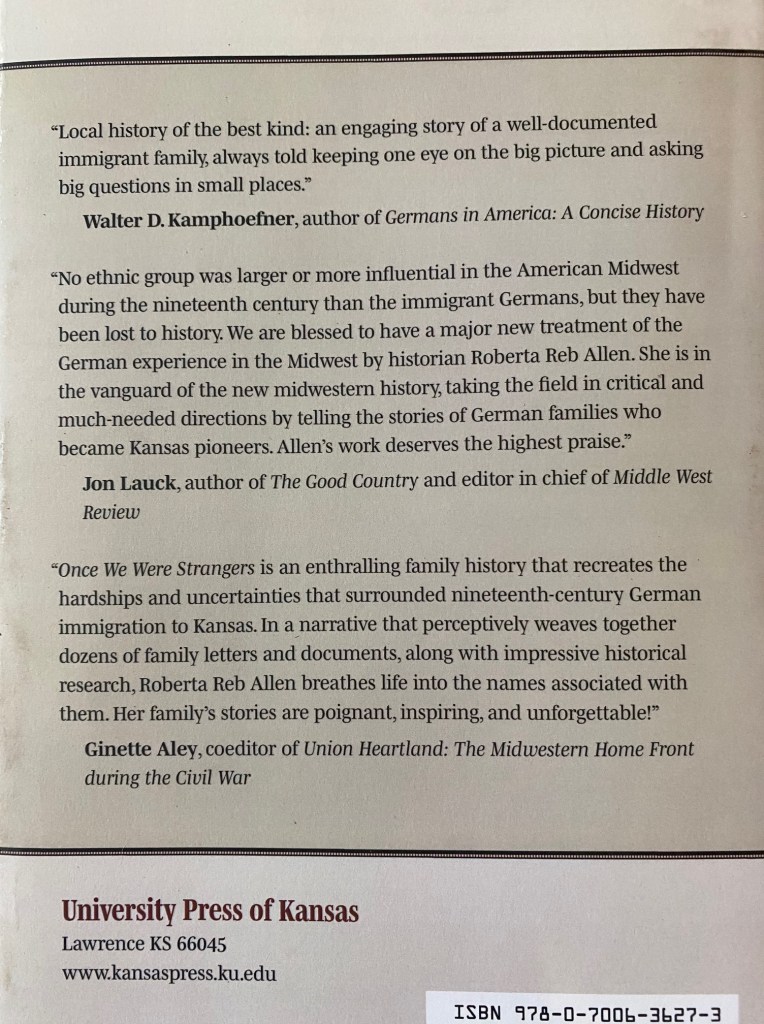
Little attention has been paid to the settlement of Germans in Kansas, and Roberta Reb Allen’s Once We Were Strangers helps to fill that void. It is both the saga of an immigrant family told within the larger social, political, and economic context of the day and a scholarly exploration of the settlement patterns and the diverse choices made by German pioneers. Starting in the small village of Ebhausen in the Black Forest of the Kingdom of Württemberg in what is now Germany, Allen follows the fortunes of the Lodholzes who journeyed across the Atlantic and eventually settled on the plains of the Kansas Territory in Marshall County.
Based on nearly 200 family letters and documents translated from Old German, Once We Were Strangers chronicles, through the pens of ordinary people, the conditions in Württemberg which led to emigration and the sweep of American history from the 1850s to the nominal end of the frontier in 1890. In addition, Once We Were Strangers provides the unusual opportunity to follow a German immigrant family for an extended period, almost from cradle to grave. Using remarkably rare documentary evidence, Allen explores the largely untold story of German assimilation, uncovering the pressures the Lodholzes faced and how they responded to the antebellum Midwest.
This family’s story is full of hardship, endurance, joys, and sorrows, and is interwoven with the history of westward expansion, German migration, and Kansas, with a particular emphasis on German settlement patterns prior to the Civil War.
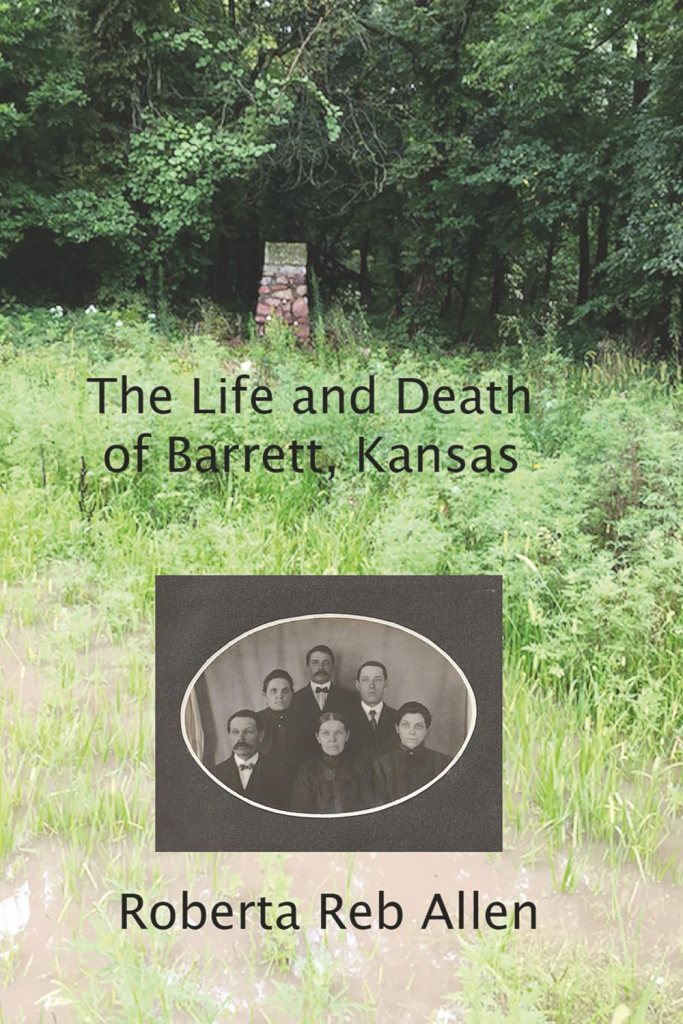
The Life and Death of Barrett, Kansas is the real-life story of a small, stouthearted town and an immigrant farming family which lived near it. Both had been among the first settlements and settlers of the Kansas Territory. Based on an abundance of family letters and photographs as well as in-depth research, Roberta Reb Allen has woven the story of the family, the town and the other inhabitants it served over seven decades: from the Chicago World’s Fair in 1893, World War I, the Great Depression, World War II to the 1960s when Barrett was razed to make room for a dam and many of the family members and other inhabitants had died. You will meet and hear the voices of a large cast of “characters” to draw you into a now long-gone era of American history. It is The Little House on the Prairie for adults.
“This is a candid and throughly researched and documented tale. Allen writes without judgement, letting readers get to know the characters. . . .Overall, this is a well written and researched story. It should resonate with wide readership, particularly those touched by mental illness.”–BlueInk Reviews.
“The writing is clean and crisp–direct, but peppered with allusions to Svengali, La Bohème, and other cultural touchstones. The prose captures emotions, relationships, and greater truths well, sometimes in just a few evocative brushstrokes. Sentences are declarative and images are concrete, including of mashing potatoes, proofing galleys, and feeling a sharp sense of isolation at university. The sparing use of direct quotations is effective, reserved for emotional truths. Frequent and candid family photographs help to illustrate the events described.” — Foreword Clarion Reviews
EXAMINED LIVES
BY ROBERTA REB ALLEN ‧
A deft account of mental illness and motherhood.
A writer recounts the story of her mother’s schizophrenia diagnosis and subsequent lobotomy in this debut memoir.
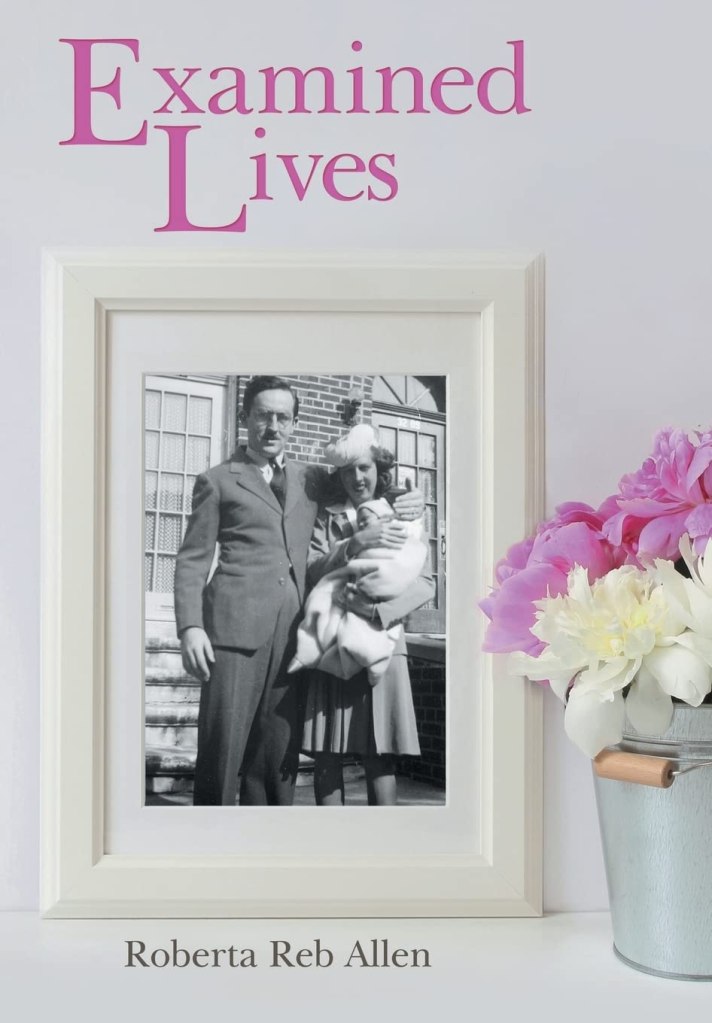
After the death of her husband; a prolonged, difficult battle with depression and irritable bowel syndrome; and suicidal thoughts during a solitary Christmas on a remote farm, Allen checked herself into a mental health facility to get her life in order. She decided that, as part of her investigation into herself, she would go through the papers of her dead parents: her mother’s diaries and scrapbooks, her father’s unpublished poetry and novels, and, most significantly, “what remained of my mother’s patient records in Walter Freeman’s files and at the Independence Mental Health Institute to which she was committed.” It was while under the care of Freeman—a physician whose methods would later become the stuff of horror stories—that Allen’s mother, Gretchen Richard, was declared a schizophrenic and forced within days to undergo a lobotomy that completely changed her personality. In this memoir, Allen reconstructs Gretchen’s life as a young, single Roman Catholic woman in Depression-era Chicago, where she met and married Everett Reb, an aspiring writer. The strained marriage and her erratic behavior eventually led her to Freeman, whose swift and drastic treatment changed the lives of Gretchen and her family forever. Allen’s skill as a storyteller is apparent right from the start of the book, which begins, “My life has been messy. At times, it has been almost unbearably messy, and that has had a far-reaching impact on my life. I did not suffer unrelenting misery.” Her parents are perfect subjects: Gretchen, a tragic yet magnetic figure; Everett, an observant and thorough diarist. While there are a few sections where the narrative gets bogged down in the minutiae of biography (moves, relatives), the story is as compelling as it is upsetting. The author not only sheds light on the disturbing mid-20th-century practice of lobotomy (which was mostly performed on female patients), but also thoughtfully examines the ramifications of such practices—and mental illness generally—on subsequent generations. Allen stares boldly into the darkness but manages to find in her own life a glimmering alternative.

Join novice gardeners Neil and Roberta Allen as they create a small flower farm, with a flourishing lavender field, out of a blank slate of land. This book, based largely on their own experiments and experiences, shares with you their mishaps, failures and ultimately their triumphs as they do it all: make and fence fields, start seeds, build sheds, find markets and much more. And, there are flowers and more flowers—annuals, perennials, bulbs—along with ideas about how to handle and preserve them—dried and cut—and what you might do with them.
BIO
Currently I am an independent researcher. I received my B.A., M.A. and completed the course work for a Ph.D. in history at the University of Chicago with Hanna Holborn Gray as one of my mentors.
Retired, I have concentrated on writing well-researched books on topics of interest to me. Among my most recent is Once We Were Strangers: A German Immigrant Family in the Nineteenth-Century Midwest published by the University Press of Kansas in 2024. As an outgrowth of the research for the book, I have written numerous papers on themes involving German settlement, including ones for a symposium held by the Society for German American Studies and a conference held by the Northern Great Plains History Association. I have had papers published in Kansas History: A Journal of the Central Plains; and the Middle West Review. A third paper is due to be published later this year in the Yearbook of German American Studies.
Examined Lives describes the life of my mother who was given a lobotomy by Walter Freeman, the man who famously botched the lobotomy of Rosemary Kennedy. Although most of Freeman’s patients were women, this is the only published story of a female patient. In conjunction with the book, I wrote an article for The Psychologist, published by The British Psychological Society, in 2019. The article brought my work to the attention of a production company in Britain which is producing a series of podcasts on lobotomies for a major distributor due out this year.
Having made Chicago my home for many years, I have always admired Aaron Montgomery Ward and in fact have lived in or near two communities where he resided. When I began researching the biography almost ten years ago, I was immediately struck by three very surprising facts that have shaped my reason for writing it and the approach I have taken. First, there has been no published biography of Aaron Montgomery Ward. The second surprising fact was that Ward left behind only one letter of his hand. The last surprising fact was that there was so much erroneous information about him, including in the information he provided about himself, as well as major lacunae in his story. As a historian, I felt compelled to “set the record straight” about the many inaccuracies I encountered and to share the considerable amount of new information I had gathered.
CONTACT ME
FEEL FREE TO ASK QUESTIONS OR TO LEAVE YOUR NAME AND EMAIL IF YOU WISH TO BE NOTIFIED WHEN THE WARD BIOGRAPHY IS PUBLISHED.


 robertareballen